An Introduction to Artificial Intelligence (AI)
Artificial intelligence sounds complicated, but the basic idea is surprisingly simple.
AI uses large amounts of information to recognise patterns, make predictions and produce useful results. Depending on the system, it can read and write text, analyse documents, create images, interpret data, write software, answer questions and automate parts of a business process.
It is exceptionally sophisticated technology, but it isn't magic, and it doesn't think like a person.
What can AI actually do?
Modern AI is particularly good at tasks involving information, language and repetition. It can help organisations:
- Summarise documents, meetings and correspondence
- Search large collections of business information
- Draft reports, proposals and marketing content
- Analyse data and identify patterns
- Assist with software development
- Answer routine customer or employee questions
- Extract information from forms, emails and invoices
- Automate repetitive, multi-stage processes
- Support research, planning and decision-making
The important word is support. AI can produce impressive results, but it can also misunderstand a request, overlook important context or present incorrect information with complete confidence.
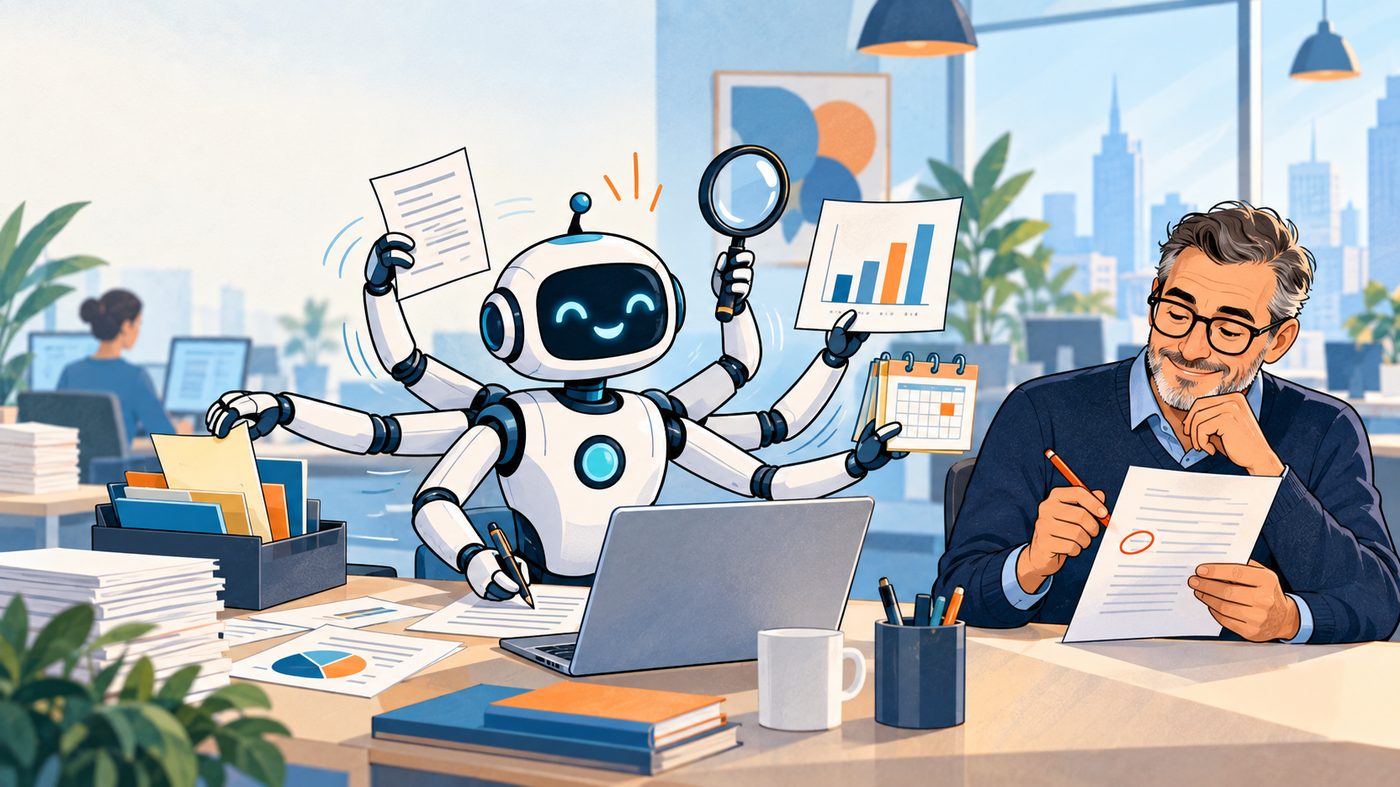
It is less like an electronic oracle and more like an extremely fast assistant: one that has read an enormous amount, never asks for a coffee break and occasionally needs its work checked.
Generative AI, assistants and agents
Although the terms are sometimes used interchangeably, they describe different things.
Generative AI creates new content, including text, images, audio, video and computer code.
AI assistants provide a convenient way for people to interact with AI. Products such as ChatGPT, Microsoft Copilot, Gemini and Claude fall into this broad category.
AI agents go further. They can follow a series of steps, use connected tools and take permitted actions, such as researching information, updating a system or preparing a report.
The more an AI system can do, the more important its permissions, safeguards and human oversight become.
Who are the key players?
The AI market is moving quickly, but several organisations currently provide many of the models, assistants and platforms used by businesses:
- Microsoft integrates Copilot into products such as Word, Excel, PowerPoint, Outlook and Teams. Because Copilot is designed around the Microsoft suite, it is convenient and genuinely useful for everyday Office tasks. But it does not offer the full power and flexibility of dedicated AI products such as OpenAI's ChatGPT or Anthropic's Claude. Read: You Have Copilot. But Do You Have an AI Strategy?
- OpenAI develops the technology behind ChatGPT and provides business products, developer tools and APIs for building tailored AI solutions.
- Google offers Gemini across its productivity and cloud services, alongside tools for building and managing enterprise AI applications.
- Anthropic develops Claude, an AI assistant and model family used for writing, analysis, software development and business workflows.
There are many other important providers, including Meta, NVIDIA, Mistral AI and specialist vendors serving particular industries.
There is no single "best AI" for every organisation. The right choice depends on the job, existing technology, information sensitivity, required integrations, cost and acceptable level of risk.
Why organisations may need support
Buying an AI licence is easy. Turning it into something useful, secure and measurable is the difficult part.
Without a clear plan, organisations can end up with several expensive tools, uncertain results and employees quietly pasting sensitive information into whichever chatbot they discovered first.
Effective adoption requires answers to some practical questions:
- Which business problems are genuinely suitable for AI?
- Is the organisation's information accurate and accessible?
- What information may employees safely share with an AI service?
- Which provider and model best suit each use case?
- How will the AI connect to existing systems?
- Who checks its answers and takes responsibility for decisions?
- How will quality, cost, security and business value be measured?
- What training and guidance will employees need?
This is where independent support becomes valuable.
From interesting technology to useful capability
I help organisations move beyond demonstrations and sales presentations to identify where AI can deliver genuine value.
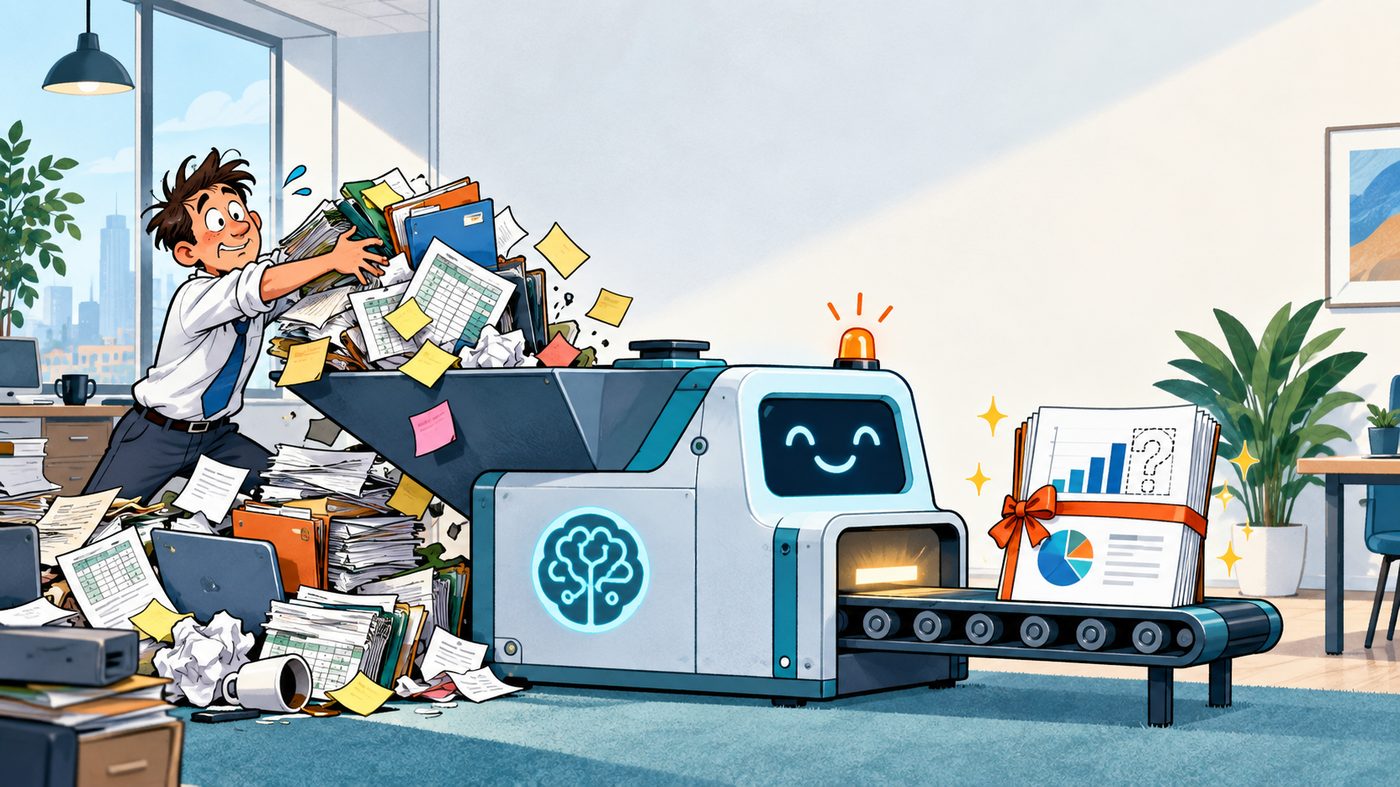
That may involve assessing opportunities, comparing platforms, improving information and permissions, designing safe workflows, creating proofs of concept or helping employees use AI effectively and responsibly.
AI does not need to replace your people or reinvent the entire organisation. Used well, it can remove tedious work, make information easier to use and give people more time for the decisions that genuinely require human experience.
The objective is not simply to say that your organisation "uses AI."
It is to make sure AI is solving the right problems, and that someone notices when it isn't.
Start the conversation
If your organisation is somewhere between curiosity and commitment, that's exactly where independent advice helps most. The first conversation costs nothing and commits you to nothing.
Get in touch